

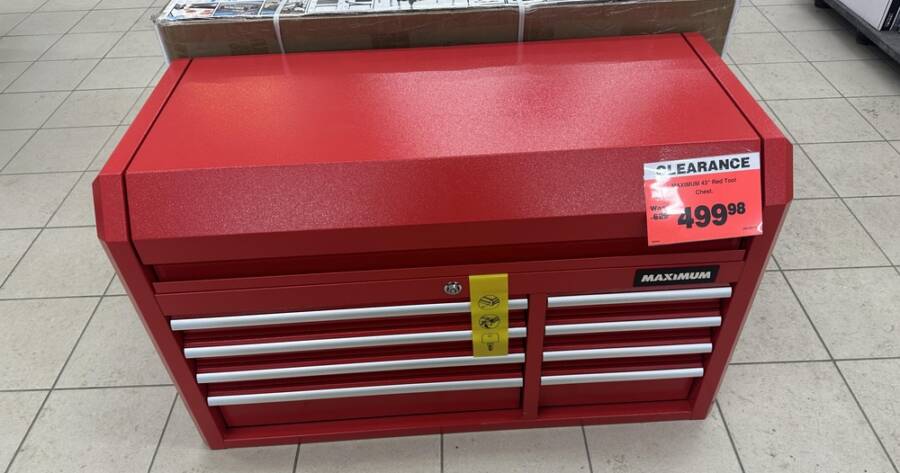
Retailers often face the challenge of managing unsold tool chests after major sales events, leading to strategic inventory management practices. From clearance sales and outlet stores to liquidation markets and refurbishment programs, each step offers unique opportunities for consumers to acquire quality products at reduced prices. Understand how key processes maintain market stability and offer economic benefits.
Understanding the Journey of Unsold Tool Chests
After major sales events like Black Friday or Father’s Day, retailers often find themselves with excess inventory of tool chests. This surplus is primarily due to imperfect demand forecasting, which necessitates efficient inventory management to clear valuable retail and warehouse space (source).
The journey of these unsold tool chests involves several strategic steps to minimize losses and maintain market stability. And fortunately, there are potential advantages for savvy consumers.
Initial Steps: Clearance and Outlet Stores
The first step in managing unsold tool chests is often in-store clearance. Retailers mark down prices and move these items to designated aisles, with initial discounts typically ranging from ten to fifteen percent (source). Over time, these discounts may increase to attract buyers.
Additionally, unsold tool chests may be relocated to outlet stores operated by large hardware chains. These outlets offer permanent price reductions, providing consumers with opportunities to purchase new, unopened merchandise at discounted rates.
Liquidation and Return to Vendor Agreements
For larger volumes of excess stock, the liquidation market serves as a primary destination. Retailers sell unsold tool chests to third-party liquidators, who then resell them as “overstock” to smaller businesses or independent sellers (source).
Another option, though less common due to high freight costs, is Return to Vendor (RTV) agreements. These allow retailers to send unsold tool chests back to manufacturers, remaining a part of the retail ecosystem for managing excess inventory.
Redistribution and Refurbishment
Post-promotion, unsold tool chests are often stored in regional distribution centers where they are assessed for future sales opportunities. This storage phase typically lasts 30 to 90 days, during which companies evaluate carrying costs against potential revenue (source).
Surplus tool chests are often redistributed to regions with higher demand, extending the selling season and maintaining consistent pricing. Additionally, refurbishment programs repair and repackage returned or slightly damaged tool chests for secondary markets, recovering value while maintaining quality standards.
Consumer Opportunities and Considerations
Smart buyers can find deals on unsold tool chests by regularly checking clearance sections, exploring online liquidation marketplaces, and following local resellers and auction houses. These strategies help consumers navigate secondary markets effectively (source).
Consumers can find substantial value in surplus markets by timing purchases around clearance cycles, industry trade shows, and new model releases. Factory outlets and authorized liquidation partners offer genuine products at significant discounts (source).
Why You Should Learn More About Tool Chests
Understanding the journey of unsold tool chests provides valuable insights into the retail and inventory management processes. From clearance sales to liquidation markets, each step offers unique opportunities for consumers to acquire quality products at reduced prices. By exploring these avenues, consumers can make informed purchasing decisions and potentially save significantly.
Additionally, learning about these processes highlights the importance of strategic inventory management in maintaining market stability and minimizing losses. As the retail landscape continues to evolve, staying informed about these practices can offer both economic and environmental benefits.