

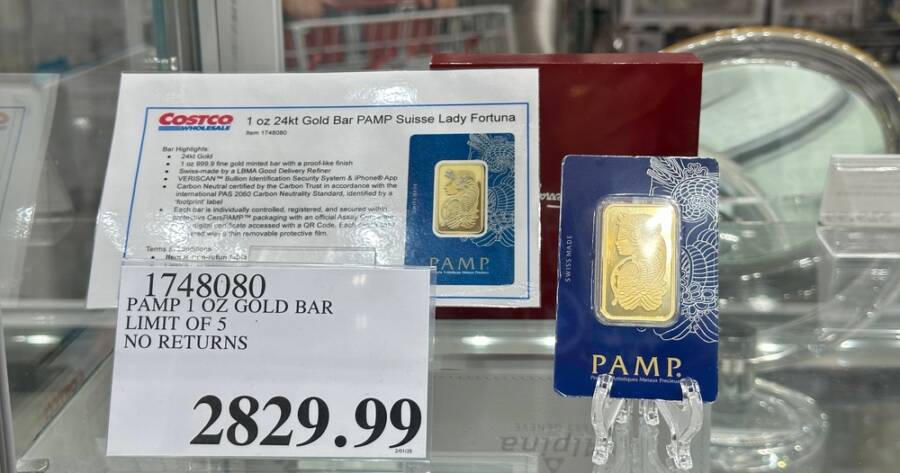
Costco’s venture into the gold market offers investors a unique opportunity to acquire 24-karat gold bars at competitive prices. With low premiums and potential rewards for members, gold bars present a cost-effective investment option. However, buyers must navigate challenges such as storage and liquidity, making informed decisions crucial for maximizing returns and portfolio diversification.
Understanding Costco Gold Bars
Costco has made a significant impact in the gold market by offering 24-karat gold bars from reputable refiners such as PAMP Suisse and Rand Refinery. This initiative provides a unique opportunity for investors to diversify their portfolios with physical gold, a commodity known for its stability and value retention.
The gold bars are sold with a low premium of 1% to 2% over the spot price, which is considerably lower than the 5% to 10% premiums typically charged by traditional dealers (source). This makes Costco’s offering a cost-effective option for investors looking to add gold to their investment strategies.
Benefits of Investing in Costco Gold Bars
One of the primary benefits of purchasing gold bars from Costco is the competitive pricing. The low markup, typically around 2% over the spot price, is a significant draw for buyers, especially when compared to other retailers who may charge higher markups (source).
Additionally, Costco members can earn rewards such as 2% cash back with the Costco Anywhere Visa Card by Citi and an annual 2% reward for Executive Members, enhancing the overall value of the investment (source).
Considerations and Challenges
While investing in gold bars can serve as a hedge against inflation and a safe haven during economic uncertainty, it comes with challenges such as storage, security, and liquidity issues. Costco imposes strict buying limits due to high demand, allowing only one transaction per membership and a maximum of two units per 24 hours (source).
This ensures fair access to this investment opportunity but requires buyers to plan their purchases carefully. Additionally, Costco does not offer buy-back services, so investors need to plan their exit strategy in advance, identifying reputable dealers for selling their gold and understanding the tax implications of capital gains on collectibles (source).
Market Trends and Timing
The price of Costco’s gold bars is influenced by global market trends, with fluctuations in the spot price of gold affecting the final purchase price. Investors should monitor market conditions and consider timing their purchases to maximize potential returns.
Since Costco began selling gold bars in August 2023, the price of gold has increased significantly, highlighting the potential gains for early buyers and underscoring gold’s role as a hedge against market volatility and inflation (source).
Why You Should Learn More About Costco Gold Bars
Costco’s introduction of gold bars to its product lineup has been a significant success, with strong consumer interest in purchasing gold as a commodity alongside everyday items. The competitive pricing, coupled with the potential for cash-back rewards, makes Costco an attractive option for those looking to diversify their investment portfolios with physical gold.
However, potential buyers should be aware of the limitations and challenges associated with physical gold investments, such as storage and liquidity issues. By understanding these factors and monitoring market trends, investors can make informed decisions and potentially benefit from the stability and value retention that gold offers.